


The Chess Player’s Nutrition
How Food Affects Your Game
Introduction
Chess is not only an intellectual sport, but also an endurance marathon. A tournament game can last for several hours, and to maintain focus, the brain needs energy. Studies show that proper nutrition can improve cognitive functions by 20-30%. For example, world champion Magnus Carlsen includes fatty fish and nuts in his diet to maintain mental clarity even in the endgame. In this article, we will discuss how to turn food into your ally at the chessboard.
The Role of Nutrition for Chess Players
The brain of a chess player consumes up to 20% of the body’s total energy. That’s why nutrition directly impacts:
- Memory – Remembering opening patterns and common endgames.
- Calculation speed – For example, assessing a position after a queen sacrifice.
- Emotional stability – Controlling nerves in a time scramble.
During a 6-hour tournament, the brain burns about 300 kcal, similar to a one-hour run. Without the right “fuel,” attention fades, and mistakes increase.
Healthy Nutrition Principles for Chess Players
Nutrient Balance:
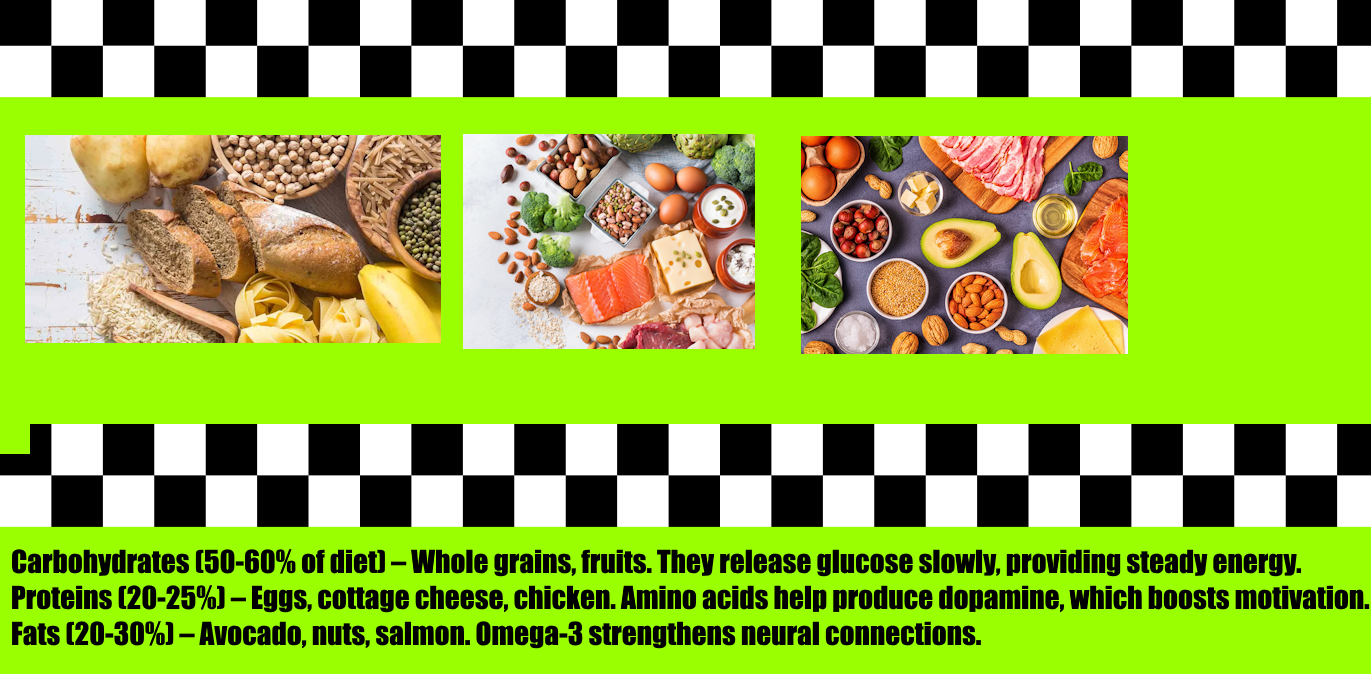
- Carbohydrates (50-60% of diet) – Whole grains, fruits. They release glucose slowly, providing steady energy.
- Proteins (20-25%) – Eggs, cottage cheese, chicken. Amino acids help produce dopamine, which boosts motivation.
- Fats (20-30%) – Avocado, nuts, salmon. Omega-3 strengthens neural connections.
Example snack: A handful of almonds (5-7 pieces) + 2 pieces of dark chocolate (70% cocoa). The magnesium and antioxidants reduce stress.
Diet Recommendations During Tournaments
Before the Game:
Eat a portion of complex carbohydrates and protein 2 hours before the game.
Ideal breakfast: Oatmeal with a banana + a 2-egg omelet. Avoid pancakes with syrup – sugar will cause drowsiness after an hour.
During the Game:
Every 40-50 minutes, take a food break:
- Dates or dried apricots (2-3 pieces) – quick energy boost.
- Lemon water – better than sugary sodas for hydration.
- Apple slices with peanut butter – a balance of fruit sugar and protein.
Important: Limit coffee to 1 cup a day. Too much caffeine can cause hand tremors.
After the Game:
Replenish your energy with a protein-rich dinner and fiber.
Example: Baked mackerel + quinoa + green beans. Fish contains vitamin D, which improves mood after a loss.
Top 5 Foods for a Chess Player’s Brain
- Blueberries – Anthocyanins increase blood flow to the hippocampus, which is responsible for memory.
- Walnuts – The shape of the nut resembles the brain! They contain alpha-linolenic acid to improve thinking speed.
- Spinach – Iron and folic acid prevent “brain fog” during long games.
- Pumpkin seeds – Zinc boosts the accuracy of calculating combinations.
- Green tea – L-theanine reduces anxiety without causing drowsiness.
5 Enemy Foods for Chess Players
- Energy drinks – The sharp glucose spike is followed by a decline in energy after 2 hours of play.
- Fast food – Trans fats reduce brain circulation by 15%.
- White bread – Simple carbs lower concentration after 30 minutes.
- Salty snacks – Excess sodium causes swelling and headaches.
- Sugary soda – 1 can = 9 cubes of sugar. It promotes aggression and inattentiveness.
Nutrition During Training
Training sessions are the perfect time to form good habits:
- Drink 100 ml of water every 20 minutes. Dehydration by just 2% can reduce problem-solving speed by 10%.
- After analyzing openings, eat a sandwich with turkey and avocado – protein and healthy fats help absorb new patterns.
- While solving tactical puzzles, keep carrot sticks nearby – the crunch stimulates creativity.
Conclusion: Nutrition as Part of Your Strategy
A balanced diet is just as much a tool for a chess player as knowing the Sicilian Defense. Start small: replace that chocolate bar with a handful of nuts, and switch your coffee for matcha. The CHECKMAT platform not only offers puzzles for training but also provides meal plans from grandmasters. Remember: Your brain deserves champion fuel!